
Retatrutide
Peptide Research & Laboratory Information
A straightforward guide to the retatrutide peptide, its triple receptor activity, investigational research, molecular structure, analytical testing and research-use material.
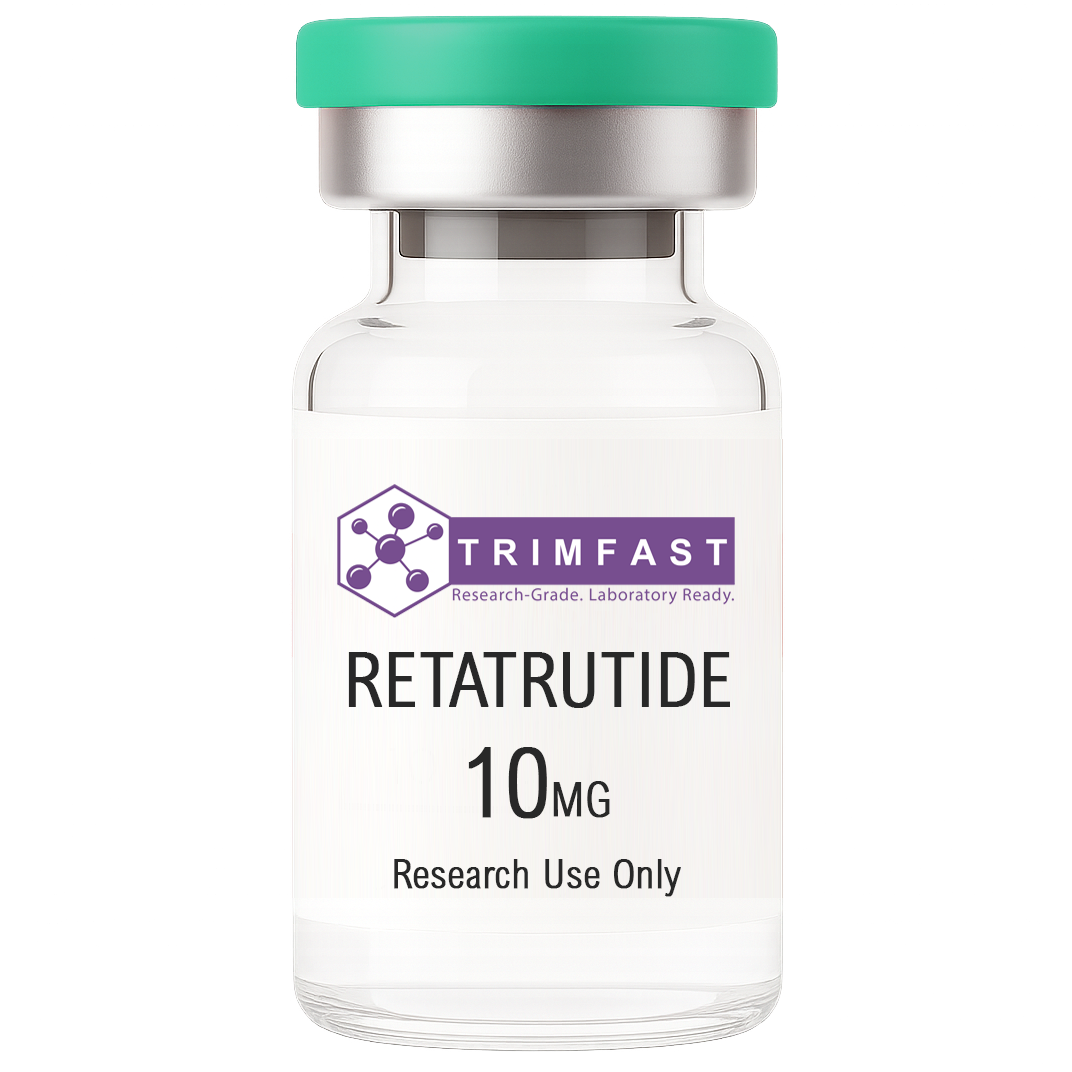
Retatrutide Vials - 10mg
Research-use retatrutide material supplied as a 10 mg lyophilised vial.
View Product →What is retatrutide?
Retatrutide is an investigational peptide being studied as a triple GIP, GLP-1 and glucagon receptor agonist.
Retatrutide as a research peptide
A peptide is a chain of amino acids. Retatrutide is a synthetic peptide with a structure based on a GIP peptide backbone and additional modifications.
Unlike semaglutide, which primarily targets the GLP-1 receptor, and tirzepatide, which targets GIP and GLP-1 receptors, retatrutide is designed to activate three receptor systems.
These are the GIP, GLP-1 and glucagon receptors.
Investigational status
Retatrutide remains an investigational compound. It is being studied in Phase 3 clinical research and has not been established as an authorised medicine.
Research status can change as clinical trials are completed and regulatory reviews take place.
GIP + GLP-1 + glucagon explained
Retatrutide is studied because it combines activity at three different receptor systems in a single molecule.
GIP receptor
GIP stands for glucose-dependent insulinotropic polypeptide. The GIP receptor responds to this signalling hormone.
GLP-1 receptor
The GLP-1 receptor is involved in several biological signalling processes, including processes related to glucose regulation.
Glucagon receptor
The glucagon receptor responds to glucagon signalling and is involved in processes including energy and glucose metabolism.
Retatrutide 10 mg for research use
TrimFast supplies retatrutide research material in a 10 mg lyophilised vial. This page explains the compound, its research status and analytical information, while the product page provides the specific product details.
Clearly identified research material.
Retatrutide remains under clinical investigation.
Intended for laboratory and analytical research only.
Retatrutide research
Retatrutide has progressed from early clinical research into Phase 3 investigation across several research programmes.
Triple receptor activity
A major area of research is the combined activity of retatrutide at the GIP, GLP-1 and glucagon receptors.
Metabolic research
Studies have examined glucose-related and metabolic measures in different research populations.
Body-weight research
Clinical trials have investigated retatrutide in adults with overweight or obesity and measured changes in body weight.
Type 2 diabetes research
Phase 3 research has also examined retatrutide in adults with type 2 diabetes alongside other measured outcomes.
Additional research areas
The clinical development programme has included research into several obesity-related complications and metabolic conditions.
Analytical research
Laboratory research can examine peptide identity, purity, concentration, stability and other analytical characteristics.
Retatrutide in laboratory research
Research involving an investigational peptide can include both biological questions and analytical questions about the material being studied.
Identity
Identity testing asks whether the material has characteristics consistent with the intended compound.
Purity
Purity describes the proportion of analysed material associated with the intended compound rather than other detected components.
Concentration
Concentration describes the amount of material present in a defined volume of solution.
Retatrutide molecular weight and structure
The molecular information below provides a useful starting point for researchers working with retatrutide as a peptide material.
Retatrutide
An investigational peptide with GIP, GLP-1 and glucagon receptor activity.
Retatrutide molecular formula
PubChem records the molecular formula of retatrutide as C221H342N46O68, with a reported molecular weight of approximately 4,731 g/mol.
Molecular formula and molecular weight describe the chemical structure. They do not, by themselves, establish the purity or composition of a physical research sample.
Retatrutide purity, HPLC and identity testing
Understanding analytical testing is particularly important when working with an investigational peptide material.
Retatrutide HPLC testing
HPLC means high-performance liquid chromatography. It separates components in a sample so they can be measured or examined.
HPLC can form part of analytical work examining chromatographic purity and related components.
Identity testing
Identity testing asks whether the material has characteristics consistent with the intended compound.
Mass spectrometry, or MS, can provide information about molecular mass and identity.
Retatrutide COA
A Certificate of Analysis, or COA, reports analytical results for a particular batch or sample.
A COA should be read together with the analytical methods and information reported on the document.
What to look for on a retatrutide COA
Clearly identify the material tested.
Link the analysis to a specific batch.
Check which testing method was used.
Understand exactly what the reported value means.
Check when the analysis was performed.
Check who performed or issued the analysis.
Retatrutide vs Tirzepatide vs Semaglutide
These compounds share some research themes but differ in the receptor systems they target and their research status.
| Compound | Receptor activity | Research status | TrimFast material |
|---|---|---|---|
| Semaglutide | GLP-1 receptor | Extensively studied | 5 mg vial → |
| Tirzepatide | GIP + GLP-1 receptors | Extensively studied | 10 mg vial → |
| Retatrutide | GIP + GLP-1 + glucagon receptors | Investigational | 10 mg vial → |
Published retatrutide research
Retatrutide research has progressed from early phase studies into a large Phase 3 clinical development programme.
Retatrutide in obesity
A phase 2 study examined retatrutide in adults with overweight or obesity over a 48-week research period.
View PubMed study →Retatrutide in type 2 diabetes
A separate phase 2 study examined retatrutide in adults with type 2 diabetes and measured glucose-related outcomes.
View PubMed study →TRIUMPH programme
The wider Phase 3 programme is studying retatrutide across several populations and research questions.
Search PubMed →Want to explore the research in more detail?
This page provides a straightforward introduction to retatrutide. The TrimFast Members Area contains deeper educational resources covering published studies, research terminology, analytical testing, COAs, preparation records and research data.
Explore Members Area →Retatrutide research questions
Straightforward answers to common questions about retatrutide, its structure, research status and laboratory analysis.
What is retatrutide?
Retatrutide is an investigational peptide designed to activate the GIP, GLP-1 and glucagon receptors. It is often described as a triple receptor agonist.
Is retatrutide approved?
Retatrutide remains an investigational compound and is currently being studied in Phase 3 clinical trials. It has not been approved as a medicine by a regulatory agency. :contentReference[oaicite:5]{index=5}
What is retatrutide used to research?
Research has examined retatrutide in areas including metabolic regulation, body-weight outcomes, type 2 diabetes and other obesity-related conditions.
What is the molecular weight of retatrutide?
The commonly reported molecular weight is approximately 4,731 g/mol.
What is the molecular formula of retatrutide?
The molecular formula reported by PubChem is C221H342N46O68.
What is a retatrutide COA?
A Certificate of Analysis, or COA, reports analytical results for a particular batch or sample. Depending on the laboratory, it may include identity, purity, assay and other analytical results.
How is retatrutide purity tested?
Chromatographic methods such as HPLC can be used to examine the composition of a sample and assess chromatographic purity. Other methods can provide additional information about molecular identity.
What is the difference between retatrutide and tirzepatide?
Both compounds have GIP and GLP-1 receptor activity. Retatrutide also targets the glucagon receptor, giving it a triple receptor profile.
What is the difference between retatrutide and semaglutide?
Semaglutide primarily activates the GLP-1 receptor, while retatrutide is an investigational compound designed to activate GIP, GLP-1 and glucagon receptors.
Looking for Retatrutide 10 mg?
Explore the TrimFast Retatrutide 10 mg product page for product, batch and research-use information.
View Retatrutide 10 mg →