
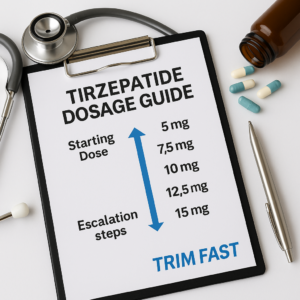
In clinical research and real-world medical practice, many treatments are introduced gradually rather than at full strength from the outset. This process—often referred to as dosage escalation or titration—is designed to help the body adapt while reducing the likelihood of unwanted effects.
For medications and compounds studied in metabolic and appetite-related contexts, including tirzepatide, gradual dose adjustment is a commonly discussed approach in scientific literature.
This article is intended for educational and informational purposes only and does not constitute medical advice.
What Is Tirzepatide?
Tirzepatide is a compound that has been studied for its activity at both GIP (glucose-dependent insulinotropic polypeptide) and GLP-1 (glucagon-like peptide-1) receptors. Because it acts on two pathways involved in glucose regulation and appetite signalling, it is often described in the literature as a dual-pathway agent.
Research has explored tirzepatide in the context of metabolic health, including glucose regulation and body-weight-related outcomes. As with many compounds studied in this area, dosing strategies are a key focus of ongoing research.
Why Gradual Dose Adjustment Is Discussed in Research
Introducing higher amounts of a compound too quickly can increase the likelihood of gastrointestinal or tolerance-related effects. For this reason, gradual escalation is frequently referenced in clinical trial designs and prescribing information as a way to support tolerability.
Rather than aiming for immediate effects, dose escalation prioritises:
-
Allowing physiological systems time to adapt
-
Monitoring individual response over time
-
Reducing the likelihood of early discontinuation
This approach reflects a broader principle used across many therapeutic areas—not just metabolic research.
Typical Escalation Patterns Described in Literature
In published studies and regulatory documentation, tirzepatide has often been evaluated using stepwise dose progression, with adjustments made at set intervals.
While specific protocols vary depending on study design and patient population, escalation models commonly involve:
-
An initial low-exposure phase
-
Incremental increases at regular intervals
-
Progression only if prior levels are well tolerated
Importantly, not all individuals progress to higher levels, and many studies note that outcomes can be observed at different points along the escalation pathway.
Any real-world dosing decisions must always be made by a qualified healthcare professional.
Assessing Tolerability During Escalation
Research highlights that tolerance can vary significantly between individuals. Factors often considered before escalation include:
-
Overall comfort at the current level
-
Presence or absence of gastrointestinal symptoms
-
General wellbeing and day-to-day functioning
Scientific discussions emphasise that escalation is not automatic, and remaining at a lower level for longer periods is sometimes appropriate.
Commonly Reported Effects in Studies
During dose-adjustment phases, studies have reported effects such as:
-
Reduced appetite
-
Changes in digestion or gastric emptying
-
Transient gastrointestinal symptoms
These observations are frequently described as dose-dependent and may lessen over time as the body adapts.
Lifestyle factors—such as meal composition, hydration, and eating pace—are often noted in research discussions as variables that may influence overall tolerance.
Why Escalation Is Viewed as a Long-Term Strategy
Rather than focusing on speed, escalation strategies described in the literature are designed to support consistency and sustainability. A slower, monitored approach may help:
-
Maintain adherence over longer periods
-
Reduce interruption due to discomfort
-
Align use with broader lifestyle and dietary considerations
This long-view perspective reflects how metabolic research increasingly frames weight-related interventions—as part of an evolving, individualised process rather than a short-term fix.
Final Thoughts
Dosage escalation is a widely discussed concept in clinical research involving tirzepatide and similar compounds. Its purpose is not to accelerate outcomes, but to balance exposure, tolerability, and individual response over time.
Educational resources like those provided by TrimFast aim to help readers better understand how these concepts are discussed in scientific and clinical contexts. Any decisions regarding use, dosing, or suitability should always be made in consultation with an appropriately qualified healthcare professional.
Hi! I’ve been reading your website for a while now and finally got the courage to go ahead and give you a shout out from Dallas Tx! Just wanted to say keep up the fantastic job!